Human-Centered Content Marketing: Why Customers Trust It More
- News
- June 23, 2026
Introduction
Today’s customers are surrounded by thousands of marketing messages every day. From social media ads to automated emails and AI-generated content, businesses are competing for attention in an increasingly crowded digital environment. Yet, despite having more tools and data than ever before, many brands struggle to create content that customers genuinely trust.
This is where Human-Centered Content Marketing becomes a competitive advantage.
Unlike traditional marketing approaches that focus mainly on selling products or promoting features, human-centered content starts with understanding people: their challenges, emotions, motivations, and real-world experiences. It creates content that feels relevant, personal, and valuable instead of transactional.
For business owners, this shift is important because trust has become one of the strongest drivers of purchasing decisions. Customers are more likely to engage with brands that demonstrate empathy, provide useful insights, and communicate like real people.
In this article, we’ll explore what human-centered content marketing means, why customers trust it more, how successful brands apply it, and how your business can use it to build stronger customer relationships.
Quick Takeaways
- Human-centered content marketing focuses on people first, not products first.
- Customers trust brands that understand their problems and provide genuine value.
- Emotional connection plays a major role in customer loyalty and purchasing decisions.
- Authentic storytelling can differentiate your brand in competitive markets.
- Customer insights should guide your content strategy.
- Businesses that prioritize helpful content often build stronger long-term relationships.
What Is Human-Centered Content Marketing?
Moving From Brand-Focused to Customer-Focused Content
Traditional marketing often follows a company-first approach:
“Here is our product. Here is why it is better. Buy now.”
Human-centered content marketing takes a different approach:
“We understand your situation. Here is something that can help you solve your challenge.”
The goal is not simply to attract attention but to create meaningful interactions between the brand and its audience.
This approach combines customer research, storytelling, empathy, and valuable information to create content that feels designed specifically for the audience.
For example, a software company selling business automation tools could create two types of content:
A product-focused article:
“Our platform has 50 automation features.”
A human-centered article:
“How growing businesses reduce repetitive tasks and give teams more time for strategic work.”
The second approach connects with the customer’s actual experience.
Why Customers Trust Human-Centered Content More
1. It Shows Understanding of Customer Problems
Customers do not want brands that only talk about themselves. They want companies that understand their challenges.
Research from organizations like Edelman has consistently highlighted the importance of trust in consumer decision-making, especially as audiences evaluate whether brands understand and respond to their needs.
Human-centered content demonstrates awareness by addressing:
- Common frustrations
- Industry challenges
- Customer goals
- Real-life situations
- Decision-making concerns
When customers feel understood, they become more open to engaging with a brand.
A financial services company, for example, may gain more trust by publishing content about “how business owners manage cash flow challenges” instead of only promoting financial products.
The difference is simple: one sells; the other helps.
Human-Centered Content Marketing Builds Emotional Connection
People Remember Stories More Than Sales Messages
Data and features are important, but emotions often influence how customers remember brands.
A strong customer-focused content strategy uses storytelling to create connections. This can include:
- Customer success stories
- Behind-the-scenes brand stories
- Founder experiences
- Real challenges and solutions
- Community-focused content
For example, a fitness brand could focus only on workout programs, or it could share stories about customers overcoming personal obstacles and achieving healthier lifestyles.
The second approach creates emotional relevance.
A useful insight for businesses is that storytelling does not mean creating dramatic campaigns every time. Even simple, authentic stories about customers and teams can make a brand feel more human.
The Role of Authenticity in Modern Content Marketing
Customers Can Detect Generic Content
One of the biggest challenges businesses face today is content saturation. Many companies produce articles, videos, and posts that look similar because they rely on generic messaging.
Human-centered content marketing focuses on originality.
Authentic content usually includes:
- Real customer language
- Industry-specific insights
- Unique opinions
- Practical examples
- Transparent communication
For instance, a consulting firm can publish generic advice about “business growth strategies,” or it can share lessons learned from working with companies in specific industries.
The second option provides more credibility because it demonstrates experience.
How Businesses Create Effective Human-Centered Content
Start With Customer Research
Successful content begins before writing starts.
Businesses should understand:
- Who their customers are
- What questions they ask
- What problems they experience
- What influences their decisions
Useful research methods include:
- Customer interviews
- Sales team feedback
- Website analytics
- Customer reviews
- Social media discussions
These insights help companies create content based on real needs instead of assumptions.
Create Content Around Customer Intent
Search behavior has changed. Customers are not only looking for products; they are searching for answers.
A strong human-centered content strategy aligns content with different stages of the customer journey.
Examples:
Awareness stage:
- “Why businesses struggle with customer retention”
Consideration stage:
- “How to choose the right customer relationship platform”
Decision stage:
- “What makes our solution different”
Each piece should support the customer’s decision-making process.
Human-Centered Content Marketing vs Traditional Content Marketing
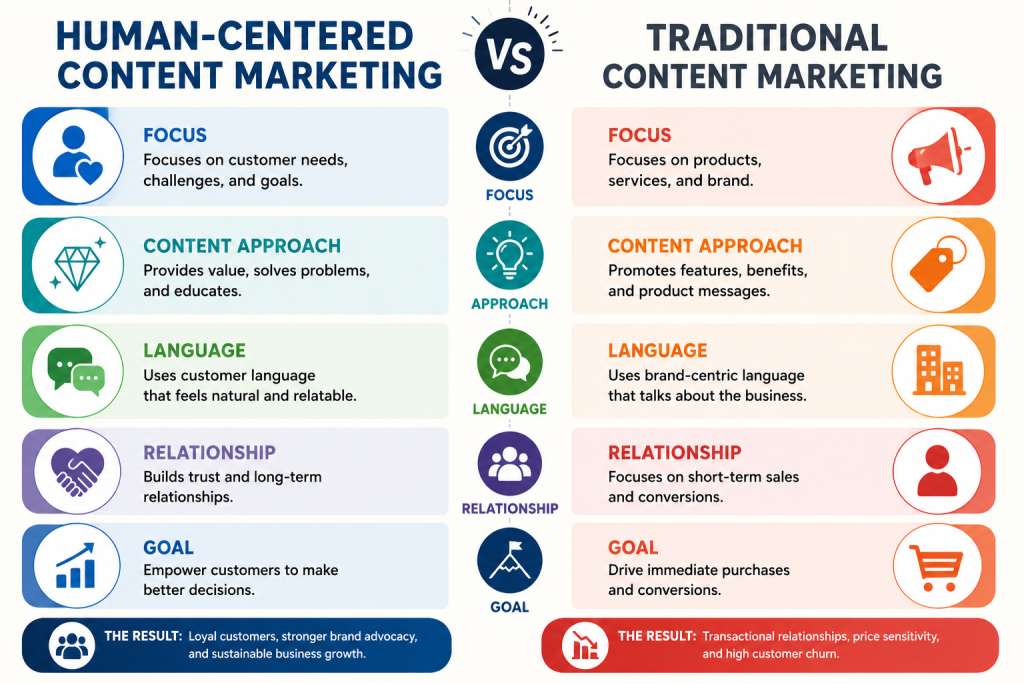
The biggest difference is perspective.
Traditional content asks:
“What do we want customers to know?”
Human-centered content asks:
“What do customers need to understand?”
Examples of Human-Centered Content Marketing in Action
Brands That Build Trust Through Customer-Centered Communication
Many successful companies have shifted from promotional messaging toward educational and community-driven content.
For example:
HubSpot built significant authority through educational marketing content that helps businesses improve sales and marketing processes.
Nike often focuses on human stories, motivation, and personal achievement rather than only promoting products.
The common factor is that both brands connect their content with customer aspirations and challenges.
How AI Changes the Need for Human-Centered Content
Why Human Perspective Matters More Than Ever
With the growth of AI-generated content, businesses can create information faster than before. However, speed does not automatically create trust.
Customers increasingly value:
- Experience
- Expertise
- Original perspectives
- Real examples
- Human opinions
The future of content marketing is not about choosing between technology and humans. It is about using technology while keeping human understanding at the center.
Businesses that combine AI efficiency with authentic human insight can create content that stands out.
How to Measure Human-Centered Content Success
Businesses should measure more than traffic.
Important metrics include:
- Engagement rate
- Time spent on content
- Returning visitors
- Customer inquiries
- Conversion rate
- Brand mentions
- Customer feedback
A successful content strategy does not only attract visitors. It builds relationships that influence future decisions.
Conclusion
Human-centered content marketing represents a major shift in how businesses communicate with customers. Instead of creating content that simply promotes products or services, brands now have the opportunity to build trust through empathy, relevance, and genuine value.
Customers trust companies that demonstrate they understand their world. They respond to content that addresses their questions, solves their problems, and reflects their experiences.
For business owners, this means moving beyond traditional promotional content and investing in strategies that create meaningful connections. The brands that succeed in the future will not necessarily be the ones producing the most content, but the ones creating the most valuable and human experiences.
By focusing on customer needs, authentic storytelling, and helpful information, your business can strengthen credibility, improve engagement, and create long-term customer loyalty.
Start by understanding your audience better, listening to their challenges, and creating content that feels like a conversation rather than an advertisement.
FAQs
1. What is human-centered content marketing?
Human-centered content marketing is a strategy focused on creating content around customer needs, emotions, challenges, and experiences rather than only promoting products.
2. Why does human-centered content build customer trust?
Customers trust human-centered content because it demonstrates understanding, provides value, and creates authentic communication instead of purely sales-focused messaging.
3. How can businesses create customer-focused content?
Businesses can create customer-focused content by researching audience needs, collecting feedback, analyzing customer questions, and developing content that solves real problems.
4. Does human-centered content marketing work for B2B companies?
Yes. B2B buyers also value trust and expertise. Educational content, industry insights, and customer stories can help businesses build stronger relationships with decision-makers.
5. Can AI-generated content be human-centered?
Yes, but businesses should combine AI tools with human insights, original experiences, and customer understanding to create authentic content.